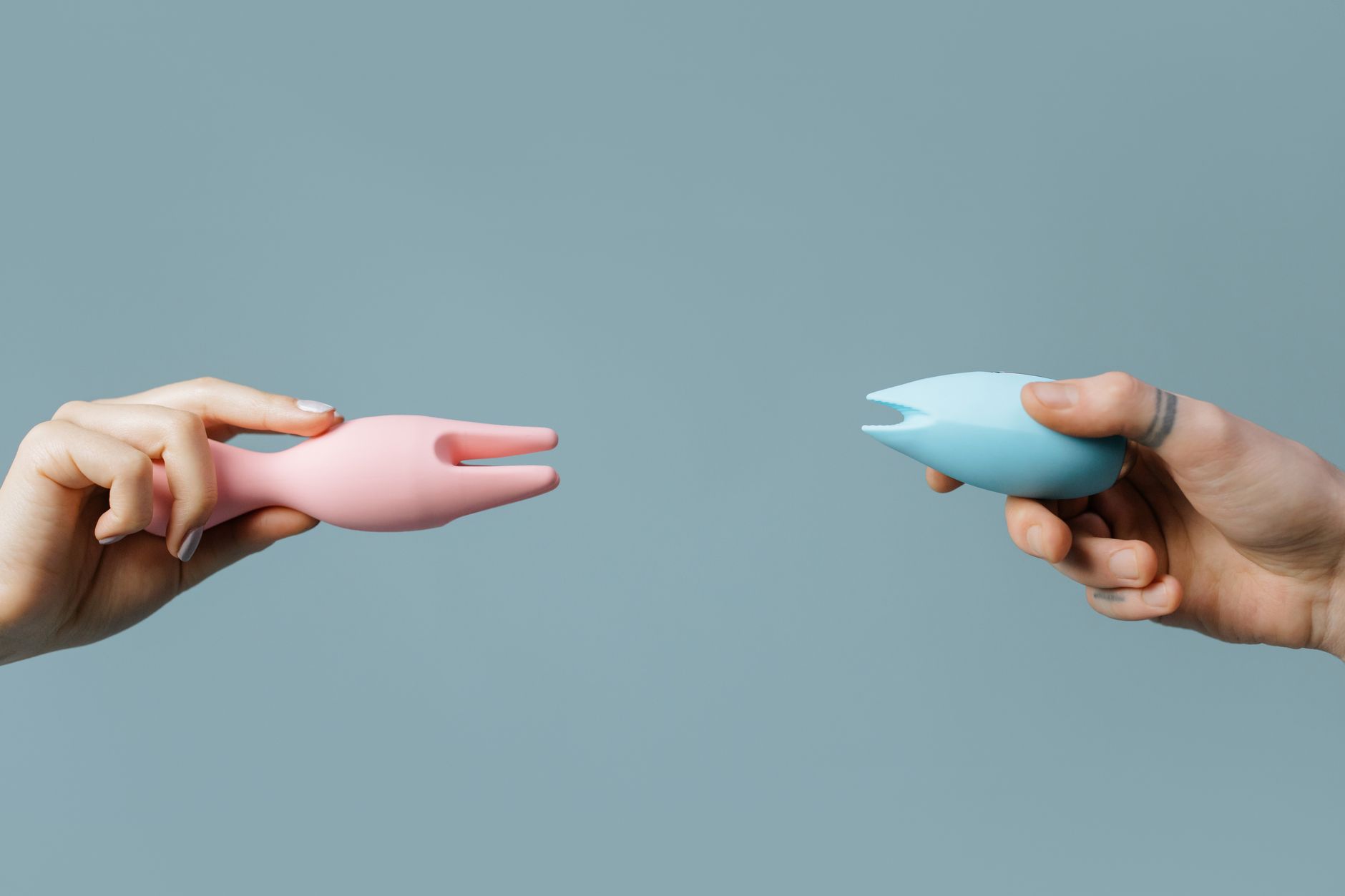
Let's talk about what depression does to pleasure
Depression doesn't just make you sad. It flattens everything. Food tastes like nothing. Music becomes background noise. And pleasure, especially sexual pleasure, stops registering at all. That's not laziness or loss of interest in the usual sense. It's anhedonia. Your brain literally stops producing or receiving the chemical signals that make sensation feel good.
When you start recovering from depression, that numbness doesn't lift all at once. Your mood might improve. Your energy might return. But pleasure can take weeks or months to come back online. And if you're trying to rebuild intimacy with a partner, or reconnect with your own body through solo pleasure, that gap feels impossibly wide. That's where a lot of people get stuck. They assume they're broken, or that their depression is still lurking underneath. Usually neither is true. Your brain just needs help waking up to sensation again.
A lemon clitoral vibrator can be that help.
Why vibration works differently when you're recovering
When depression has flattened your sensation, gentle stimulation won't register. You need a stronger signal to break through. That's the whole advantage of clitoral vibrators over other kinds of touch. They bypass the usual arousal pathway and go straight to neural activation. They're not asking your body to produce arousal. They're creating it directly.
Lemon vibrators specifically are designed with a pattern of pulsation that mimics natural stimulation but intensifies it. Where your hand might take minutes to build a response, a lemon vibrator does it in seconds. That matters when you're relearning pleasure because it shortens the window of frustration. You're not lying there waiting to feel something that might not come. The stimulation arrives immediately.
The other thing vibration does for recovering brains is that it creates a predictable sensation loop. Depression often comes with anxiety about whether you'll ever feel pleasure again. That anxiety itself blocks sensation. A vibrator removes the uncertainty. You know exactly what's coming. You know it will feel intense. And after a few sessions, your brain starts to anticipate it. That anticipation is part of how arousal rebuilds.
The timeline for sensation returning
Let's be honest about the realistic arc. Most people notice something in the first week of using a lemon clitoral vibrator after depression. It might not be intense pleasure. It might just be sensation. A tingling. A buzz that your brain registers as different from everything else. That's your nervous system waking up. Pay attention to that.
By week two or three, you might start noticing that the sensation is building. Your body might flush. Your breathing might change. These are micro-arousals. They're not the full-body fireworks that pleasure is supposed to feel like, but they're real, and they matter because they prove something is shifting.
Most people report that actual pleasure, not just sensation but genuine build and release, starts appearing around four to six weeks of consistent use. Consistent is the key word. Once a day, or every other day, works better than sporadic sessions. Your brain needs the regular signal to rewire that pathway.
If you're not feeling anything by week four, that doesn't mean the vibrator isn't working. It usually means your depression still has its hooks in you, and that's a conversation for your doctor or therapist, not a reason to abandon the lemon vibrator.
How to use a lemon vibrator safely while recovering
The biggest mistake people make when returning to pleasure after depression is trying to force the experience. They use the vibrator and expect to feel what they felt before depression. Then when that doesn't happen, they feel like they've failed. You haven't. You're just trying to fast-forward through a process that needs time.
Start at the lowest setting. Not because you're fragile, but because you need to give your nervous system permission to gradually wake up. Spend two or three sessions just getting used to the sensation without any expectation of orgasm. This sounds simple but it's genuinely hard for people. The cultural message is that vibrators are for getting off. That's not their only function. Right now they're for sensation.
Set a time limit. Fifteen to twenty minutes is enough. After twenty minutes, stimulation stops producing new signal. Your nervous system just gets tired. Better to do shorter sessions more often than marathon sessions that leave you frustrated.
Use a lubricant even if you don't think you need it. Depression often kills natural lubrication. A water-based lube won't change the sensation but it will change how your tissue responds. It's gentler and it sends a signal to your body that you're taking care of it.
Most importantly, don't use the vibrator as a test. "Did this work" or "Did I feel that" turns pleasure into pass-fail. Instead, treat each session as information. Your body is gathering data about what sensation feels like again. That's the whole goal.
When to bring a partner into the process
If you have a partner, you might feel pressure to resume partnered sex before you're ready. That pressure, however subtle, makes everything harder. Your nervous system can feel it. It tenses up. Nothing registers.
I usually recommend keeping solo pleasure with a lemon clitoral vibrator separate from partnered intimacy for at least a few weeks. Solo exploration is lower-stakes. You're not performing. You're not watching someone else's face to see if they're still attracted to you (that's a real thought that comes up). You're just learning what your own body feels like again.
Once you've started noticing actual sensation, then you can invite your partner into the experience. Not as a replacement for your solo sessions, but as an addition. Your partner can hold you. They can be present while you use the vibrator on yourself. They can tell you they love your body and that they're glad you're here and feeling things again. Those things matter in ways that sex alone doesn't.
If your partner pushes to resume full sex before you're ready, that's a boundary conversation. Your recovery comes first. Always.
The connection between vibration and nervous system healing
Here's what's actually happening when you use a lemon vibrator during recovery. Your vagus nerve, which runs from your brain through your gut and pelvis, is getting stimulated. This nerve is central to how your body switches between fight-or-flight and rest-and-digest. Depression puts your nervous system in a weird stuck place. You're neither fighting nor resting. You're numb.
Vibration wakes the vagus nerve up. Slowly and gently at first, then more strongly. This is called vagal toning. It's the same mechanism that makes breathwork and movement help depression. The vibrator is just more direct. You're not waiting for your brain to produce a response. The sensation is external and immediate.
This is why depression that comes with anxiety sometimes responds better to vibrators than depression that comes with just flatness. The stimulation grounds you in your body in a way that's hard to achieve through willpower alone. You can't think your way out of anhedonia. But you can stimulate your way through it.
Medication and vibrators, yes they work together
If you're on antidepressants, you might have read that they kill sexual function. That's partially true. Some SSRIs do dull sensation. But that's not a reason to stop taking them or to avoid using a vibrator. Many people find that their antidepressant gets their mood stable enough that pleasure can come back. Others find that the medication still creates a baseline numbness, but a lemon vibrator can push through it.
The combination often works better than either alone. The medication stabilizes your neurochemistry. The vibrator provides enough direct stimulation that pleasure registers anyway. It's not ideal, and it's worth talking to your prescriber about whether a different medication might work better for you. But it's not failure to need both.
When pleasure comes back, what's different
One thing I tell people is that pleasure after depression often feels different than before. That's not bad. It's just different. Some people describe it as sharper. Others say it feels more present, less automatic. You're not in your head overthinking. You're actually in your body.
That shift is real and valuable. You've been through something hard. Your brain has changed. The pleasure that comes out the other side is attached to your actual recovery. It's not the same as before depression because you're not the same person. And that's worth honoring, not mourning.
Using a lemon clitoral vibrator is part of that honoring. It's a tool that says yes, I deserve to feel good again. And more than that, I'm going to do the actual work to make it happen.
FAQ
How long after starting antidepressants can I use a vibrator?
Immediately. There's no interaction between antidepressants and vibrators. You can start using a lemon clitoral vibrator the day you start medication if you want to. That said, it often takes a few weeks for your mood to stabilize enough to feel anything. So start whenever you're ready mentally, not on any fixed timeline.
Can using a vibrator help me know if my depression is actually getting better?
Partially, yes. The return of sensation is often one of the first signs that depression is lifting. If you've been numb for months and suddenly a vibrator starts producing actual feeling, that's worth noting. Tell your therapist or doctor about it. But don't use vibrator response as your only measure of recovery. Mood, energy, and interest in other things matter too.
What if I feel guilty about using a vibrator while depressed?
That guilt is often part of the depression talking, not a real ethical issue. Self-pleasure is self-care. You're not being selfish or broken for wanting to feel good again. If the guilt persists even as your mood improves, that might be worth exploring in therapy. Sometimes we internalize messages about our bodies that need to be unpacked.
Can a partner's vibrator feel different than one I bought for myself?
Sometionally. The context changes the experience. If using a vibrator with a partner feels stressful because you're worried about performing, it might not register as pleasurable even if the vibrator is the same. That's why starting solo is often easier. Once you know the sensation works for you, it's easier to invite a partner in without that pressure.
What setting should I use on a lemon vibrator when starting out?
Start on the lowest pulse pattern. Don't jump to intensity yet. You're looking for sensation, not sensation overload. Many lemon vibrators have three to five settings. Spend your first few sessions on setting one. Move up only when setting one stops feeling novel.
Is it normal to not feel anything the first time?
Completely normal. Your body might need a session or two to recognize the sensation as something new. Some people feel nothing for the first week. That doesn't mean the vibrator isn't working. It means your nervous system is still waking up. Keep going.