
The strange gap between sensation and wanting
You can feel the touch. Your body responds. But somewhere between the physical and the mental, the connection snaps. You're present in some places and absent in others, and pleasure becomes this thing that's technically happening to you, not something you're actually inside of.
That's dissociation. And it's way more common during solo pleasure than most people admit.
Dissociation exists on a spectrum. Sometimes it's a gentle fog. Sometimes it's more complete: you're watching yourself from the outside, or time feels weird, or the pleasure feels hollow even when your body is clearly aroused. The experience is disconnected from the wanting, and that gap is where most people get stuck.
Why this happens
Dissociation during sexual pleasure is usually one of three things.
First, a learned response. If early sexual experiences involved pressure, shame, or a mismatch between what your body was told to do and what you actually wanted, your nervous system learned to leave. It learned that checking out was safer than staying present. The pattern can run deep.
Second, unprocessed stress. Trauma, anxiety, chronic tension. The body holds these things, and during a moment when you're supposed to be vulnerable and open, your nervous system goes into a protective split. You and your sensation separate.
Third, overthinking. Performance pressure, self-monitoring, playing out a fantasy that doesn't actually fit you. The mental load is so high that you float above the experience instead of sinking into it.
The good news: dissociation during pleasure is not a character flaw. It's not permanent. And the right conditions can bring you back.
Why clitoral vibrators work differently when you're dissociated
Here's the tactical part. When sensation feels distant, traditional stimulation often deepens the gap. You're asking yourself "Am I feeling this? Should I be feeling more? Why isn't this working?" The self-judgment compounds the dissociation.
Clitoral vibrators, especially ones like the Lem with air-pulse technology, work in a different way. The suction creates a consistent, intense input to the clitoris. It's not a sensation you have to interpret or judge. It's not subtle enough to invite overthinking. It's strong enough to demand your attention.
This matters because dissociation thrives in ambiguity. The vaguer the stimulation, the easier it is for your mind to wander. The more distinct and unavoidable the input, the harder it is to leave your body.
That's not the same as forcing yourself to feel. It's about removing the space where your mind usually escapes.
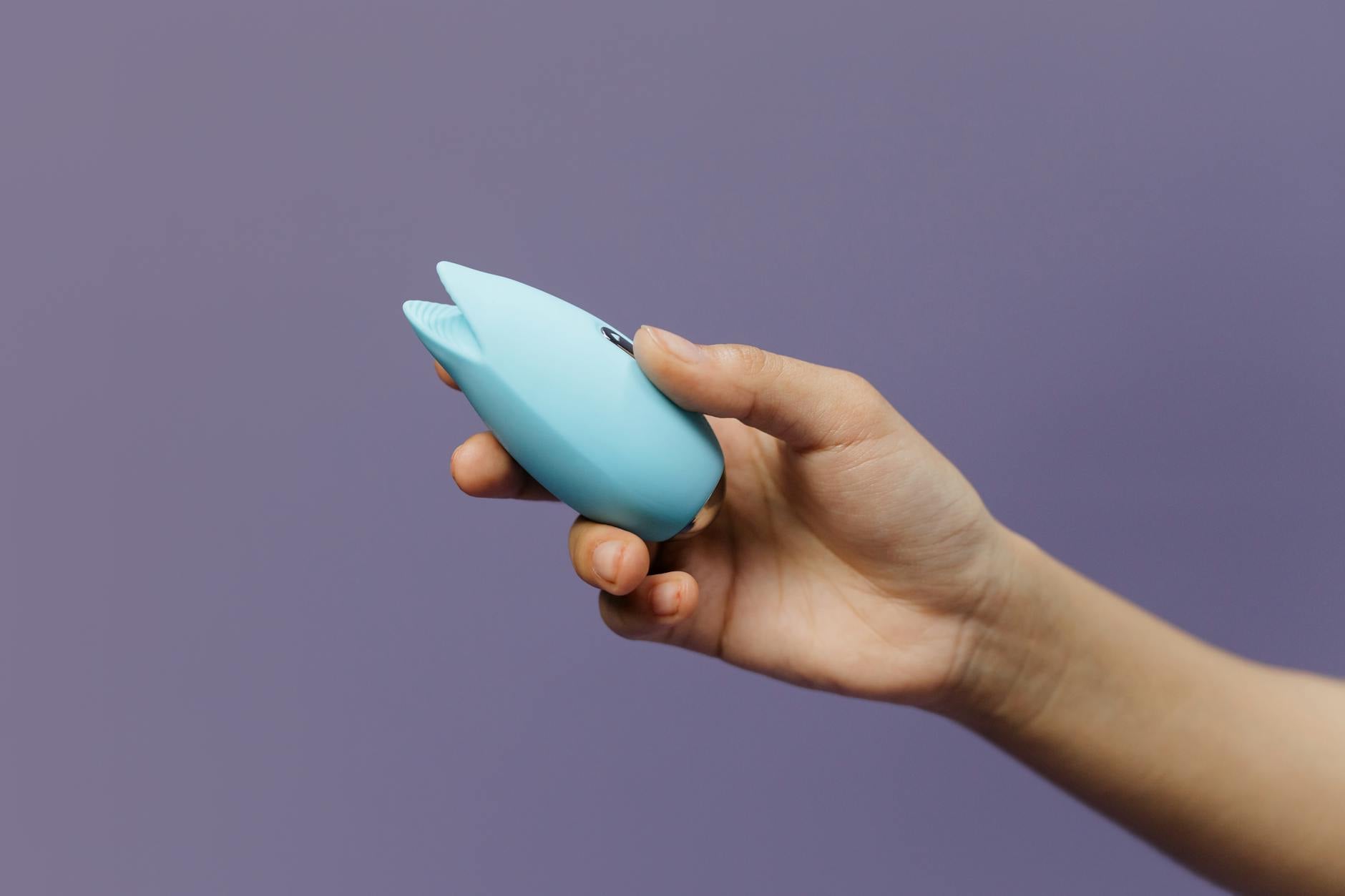
Photo by cottonbro studio on Pexels
The setup that brings you back
Technique alone won't solve this. Environment and intention matter enormously.
First, kill distractions. Phone away. Noise minimized. You're not doing this on autopilot while half-watching something else. You're creating a space where staying present is the only option. This sounds obvious. It's not. Most people try to reconnect while juggling three other mental tasks.
Second, start with non-sexual touch. Before you even think about arousal, spend five minutes noticing sensation. Run your hands over your arms, your legs, your collarbone. Name what you feel. Cold. Soft. Tingly. This is grounding. It teaches your nervous system that you can feel things and stay present at the same time.
Third, use breath intentionally. Before turning on the vibrator, breathe slowly and deeply. In for four, hold for two, out for four. This activates your parasympathetic nervous system. You're telling your body it's safe to stay.
Fourth, set a time boundary. Twenty minutes, not ninety. When dissociation is present, longer sessions invite spacing out. Shorter, intentional ones build your capacity to stay grounded. Think of it like a muscle you're retraining.
How to actually use the lemon vibrator here
When you turn on a clitoral vibrator for reconnection work, the pattern matters more than the intensity.
Start at the lowest setting. You're not chasing an orgasm yet. You're practicing staying. Place the vibrator against the clitoris and focus entirely on what you feel. Not what you think you should feel. What's actually happening right now.
If your mind drifts, notice it without judgment. Then come back to the sensation. This is the work. The coming back. Not the sensation itself.
If you feel a numbness or a fog, stay with that. Don't try to push through it or fight it. Dissociation loses power when you acknowledge it without resistance. "I'm here, but part of me is also gone," is a totally valid place to start.
Many people find that at the lowest intensity, they stay present longer. The subtle nature of the suction at lower settings requires attention rather than demanding it. You choose to notice. That choice is grounding.
If numbness persists after five minutes, stop. Dissociation is your system asking for something different right now. Try again tomorrow.
The connection between pacing and presence
One thing I notice with my clients who've experienced trauma is that slow, controllable pleasure builds presence faster than intense, fast pleasure. When you're on setting one of the Lem, you're in control. You're moving it. You're deciding. That agency is healing.
When pleasure is happening to you at high speed, especially if you have a history of things happening to your body without your consent, staying present becomes harder. The intensity can actually trigger the protective mechanism that creates dissociation in the first place.
This doesn't mean you can never enjoy intensity. It means building the capacity for presence at lower intensities first. Once you've practiced staying with gentle sensation and staying grounded, higher intensities don't trigger that escape reflex.
It's like learning to swim. You don't start in the deep end.
When this is bigger than a tool can fix
If dissociation during pleasure is tied to trauma, a vibrator is a helpful practice tool. It's not therapy. Working with a trauma-informed therapist alongside this physical practice is what actually heals the pattern.
Similarly, if dissociation is your brain's response to severe anxiety or depression, the vibrator can help you stay grounded, but the underlying condition needs attention. You deserve more than a workaround.
The sign that you need professional support: if dissociation during pleasure is paired with dissociation in daily life (feeling foggy, watching yourself from outside your body, time distortions), that's your signal to bring this to a therapist who specializes in dissociation or trauma.
What changes when you stay present
Once you've practiced reconnecting with a lemon vibrator, a few things shift. Orgasms feel different. Not necessarily stronger, but real. Like something that's happening to you that you're actually experiencing, not observing.
The pleasure becomes yours in a way it wasn't before. That's the whole point.
You might also notice that you need less time to warm up. That fantasy works better because you're in it, not narrating it from above. That partnered sex feels different because you're actually there.
But the most important shift is smaller: you learn that you can come back. You can feel disconnected, do the work, and reconnect. That knowledge changes everything.
FAQ
What's the difference between dissociation and just not being in the mood?
Not being in the mood means the arousal isn't there. Dissociation means the arousal might be there, but you're not. Your body is responding; your mind is elsewhere. You're present in some ways, absent in others. That feeling of watching yourself instead of being yourself is the key difference.
Can using a lemon vibrator make dissociation worse?
Only if you use it as a tool to force presence through intensity. If you're using it to check out faster or to override your body's signals, yeah, that's counterproductive. The opposite approach is what works: gentle intensity, intentional pacing, and stopping when you feel the fog coming on.
How long does it usually take to reconnect?
That depends on what caused the dissociation and how long it's been happening. Some people feel a shift in weeks. Others take months. The important thing is consistency. Five minutes of grounded practice is better than sporadic longer sessions. You're retraining your nervous system. That takes time.
Is dissociation during pleasure a sign of something wrong with me?
No. It's a sign your nervous system learned a protective strategy at some point. That strategy made sense then. Your job now is to show your system that you're safe enough to stay present. That's a healing process, not a character issue.
Can a partner help with this, or is it solo work only?
Both can work. Solo work builds your own capacity to stay present. That foundation matters. Once you've practiced reconnecting alone, partnered touch can feel safer because you've trained yourself in what presence feels like. You can communicate to your partner what helps: slower pacing, check-ins, breaks when you feel the fog coming.
Should I use lubricant when practicing reconnection with a lemon vibrator?
Yes. If your body is tense or protective, lubrication reduces friction and makes the sensation feel less intense and more pleasant. That gentleness is actually what helps you stay present. It removes one layer of discomfort your nervous system might be reacting to.
Reconnecting to your own pleasure is one of the most grounding things you can do. When dissociation has made touch feel like something happening outside of you, a tool like the Lem can help bring you home. Not through force, but through presence. Your pleasure matters. You deserve to be there when it happens.